
AAIR
  • Join
  • Jobs Board
MENU
  • Join
  • Jobs Board
  • About
    • Rules
    • Mission, Vision, Values and Strategy
    • Objectives
    • Code of Ethics
    • Organisational Structure
    • Executive Committee
      • Position Descriptions
      • Meeting Schedule
    • Annual Statements
    • Timeline
  • Membership
    • Join
    • Benefits of Membership
    • Membership Categories
    • Variation to Institutional Membership
    • Members
    • Life Members
      • Legacy Life Members
    • Honorary Members
    • Fellowships
  • Events
    • Proposed 2026 Calendar
    • Past AAIR Events
    • Awards
  • SIGs
    • Business Intelligence & Analytics
    • Data Governance
    • Global University Rankings
    • Institutional Reporting
    • Load Management & Planning
    • Surveys & Evaluation
  • Experts
    • Experts Search
  • Resources
    • Subscribe
    • What is Institutional Research?
      • IR Job Roles
    • Newsletter
    • JIR
    • Other Journals
    • Useful Links
  • Blog
    • From the President
    • Newsletter Editorials
    • Institutional Researcher’s Corner
    • Events
    • Publications
    • From the experts
    • Soapbox
  • Contact

Five Questions with Lester DSouza

Managing Consultant at Dataly Actuarial

Connect with Lester

Lester chose to be interviewed on a ride-on lawnmower!

1. What is your job title?

I’m currently working as a Managing Consultant for Dataly Actuarial, a management consultancy firm. I am also the Business Intelligence & Analytics SIG chair at AAIR.

2. Briefly, how would you describe your role in your institution?

As a consultant with over 14 years of experience in the higher education sector in Australia, my role involves collaborating with universities to enhance their data management strategies. Leveraging my expertise in enterprise data strategy and warehouses, I aim to help institutions overcome data-related challenges and make more efficient use of their information resources.

3. From your perspective, what will be the key skills, capabilities and knowledge required for institutional research moving forward?

The advent of Generative AI (GenAI) is set to revolutionise institutional research (IR). While it’s essential to embrace GenAI for its potential to augment IR, it’s equally important to recognise the unique human ability to understand the nuances of data. Moving forward, IR will require a blend of traditional knowledge and cutting-edge GenAI tools. Sharing knowledge about practices, processes, and methodologies will be crucial, as will the ability to work in tandem with GenAI to unlock limitless analytical possibilities. It’s vital to stay updated with the latest technologies while also valuing historical methods, as they offer invaluable lessons.
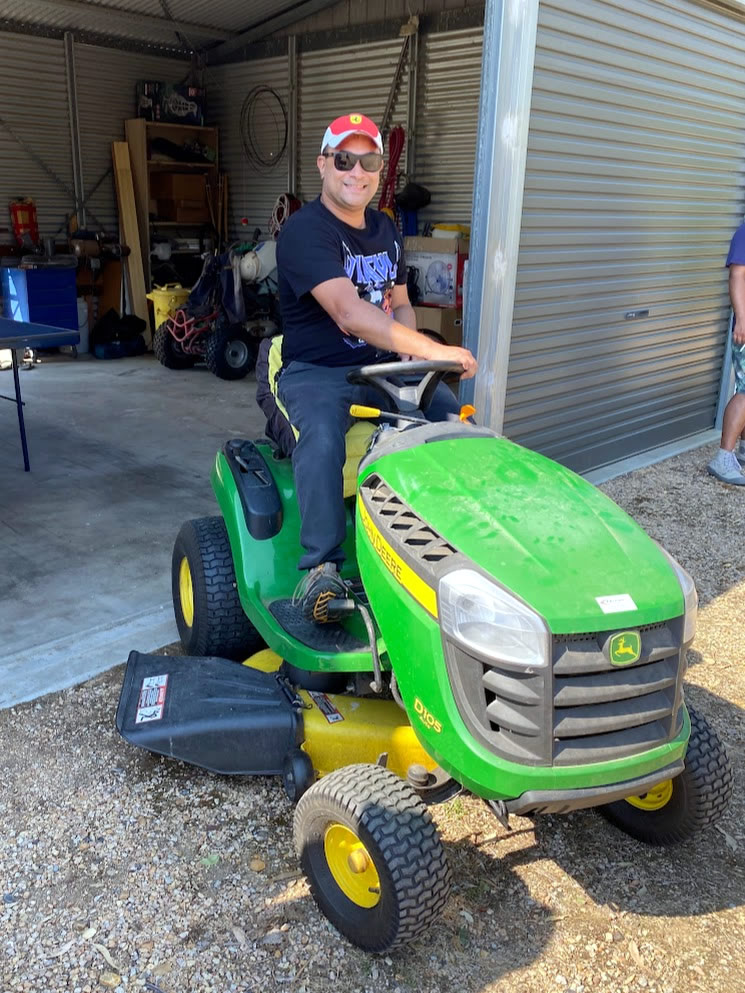
Photo of a man driving a ride-on lawnmower out of a shed.

4. What do you believe will be the future priorities or emerging areas of interest for institutional research?

From researching online and my own opinions, the future of institutional research (IR) is expected to be shaped by several key priorities:

  • Data-driven decision making: IR will increasingly focus on providing data and analytical tools that empower decision-making at all levels, not just for top-level strategy.
  • Data literacy and capacity: There will be a concerted effort to expand data literacy among stakeholders, ensuring that a wide array of data consumers can effectively manage and utilise institutional data.
  • Economics of IR: Balancing the supply and demand of information will be crucial. This involves coaching data consumers and managing institution-wide data and analytical requirements.
  • Research capacity building: Strategies to enhance research capacity, particularly in universities, will be emphasised. This includes managing the balance between research and traditional roles like teaching and service.
  • Aspirational models: IR will adopt proactive approaches to build partnerships and maintain a user-focused perspective, aligning with an aspirational model for institutional research.
  • Balanced AI integration: The integration of AI and machine learning will be a focus area, with an emphasis on avoiding ‘over-engineering’ and ensuring these technologies are used pragmatically within the research context.

These priorities highlight a shift towards a more integrated, user-centric approach to IR, where technology enhances human expertise and decision-making processes. The goal is to ensure that IR serves as a catalyst for informed decisions and strategic planning within institutions.

5. Complete this statement:
In my role, I can’t operate effectively without …

… a cohesive team that is aligned in ambition, perspective, and passion. The success I’ve experienced in the higher education sector is largely attributable to the exceptional business intelligence team I led. Together, we achieved significant milestones, driven by our shared commitment to excellence.

Additionally, the unparalleled support from the university’s executive leadership was instrumental in our achievements, providing us with the resources and encouragement needed to excel.

This synergy between a dedicated team and supportive leadership is the cornerstone of any successful operation. It fosters an environment where innovation thrives, challenges are met with creative/innovative solutions, and collective goals are realised.

Lester DSouza

April 2024

Newsletter

Read the April 2024 AAIR newsletter Right Here, Right Now!

April 2024 Newsletter

Answer 5 Questions

Would you like to feature in the ‘Institutional Researcher’s Corner’ segment of our newsletter, The Institutional Researcher? Contact our trusty editors with the answers to 5 simple questions, and we’ll feature you in an upcoming issue.

Email Our Editor

Feature icon

Subscribe to our Mailing List

About

  • Rules
  • Mission
  • Objectives
  • Code of ethics
  • Org structure
  • Committee
  • Meeting schedule
  • Annual statements
  • Timeline

Membership

  • Join
  • Benefits
  • Categories
  • Members
  • Life members
  • Honorary members
  • Fellowships

SIGs

  • BI & analytics
  • Data governance
  • Global university rankings
  • Institutional reporting
  • Load management & planning
  • Surveys & evaluation

Resources

  • Subscribe
  • Jobs board
  • What is IR?
  • IR job roles
  • Newsletter
  • JIR
  • Other journals
  • Useful links

Blog

  • President's desk
  • Editorials
  • IR corner
  • Events
  • Publications
  • From the experts
  • Soapbox

Australasian Association for Institutional Research Inc.
Suite 204, 585 Little Collins Street
Melbourne Vic 3000
info@aair.org.au

twitter facebook linkedin twitter
  • © Australasian Association for Institutional Research 2025
  • Privacy Policy
  • Terms of Use
  • Disclaimer
  • About
    • Rules
    • Mission, Vision, Values and Strategy
    • Objectives
    • Code of Ethics
    • Organisational Structure
    • Executive Committee
      • Position Descriptions
      • Meeting Schedule
    • Annual Statements
    • Timeline
  • Membership
    • Join
    • Benefits of Membership
    • Membership Categories
    • Variation to Institutional Membership
    • Members
    • Life Members
      • Legacy Life Members
    • Honorary Members
    • Fellowships
  • Events
    • Proposed 2026 Calendar
    • Past AAIR Events
    • Awards
  • SIGs
    • Business Intelligence & Analytics
    • Data Governance
    • Global University Rankings
    • Institutional Reporting
    • Load Management & Planning
    • Surveys & Evaluation
  • Experts
    • Experts Search
  • Resources
    • Subscribe
    • What is Institutional Research?
      • IR Job Roles
    • Newsletter
    • JIR
    • Other Journals
    • Useful Links
  • Blog
    • From the President
    • Newsletter Editorials
    • Institutional Researcher’s Corner
    • Events
    • Publications
    • From the experts
    • Soapbox
  • Contact