
AAIR
  • Join
  • Jobs Board
MENU
  • Join
  • Jobs Board
  • About
    • Rules
    • Mission, Vision, Values and Strategy
    • Objectives
    • Code of Ethics
    • Organisational Structure
    • Executive Committee
      • Position Descriptions
      • Meeting Schedule
    • Annual Statements
    • Timeline
  • Membership
    • Join
    • Benefits of Membership
    • Membership Categories
    • Variation to Institutional Membership
    • Members
    • Life Members
      • Legacy Life Members
    • Honorary Members
    • Fellowships
  • Events
    • Proposed 2026 Calendar
    • Past AAIR Events
    • Awards
  • SIGs
    • Business Intelligence & Analytics
    • Data Governance
    • Global University Rankings
    • Institutional Reporting
    • Load Management & Planning
    • Surveys & Evaluation
  • Experts
    • Experts Search
  • Resources
    • Subscribe
    • What is Institutional Research?
      • IR Job Roles
    • Newsletter
    • JIR
    • Other Journals
    • Useful Links
  • Blog
    • From the President
    • Newsletter Editorials
    • Institutional Researcher’s Corner
    • Events
    • Publications
    • From the experts
    • Soapbox
  • Contact

Five Questions with Omer Yezdani

Australian Catholic University, Australia

Connect with Omer

Omer chose to be interviewed in chair #10

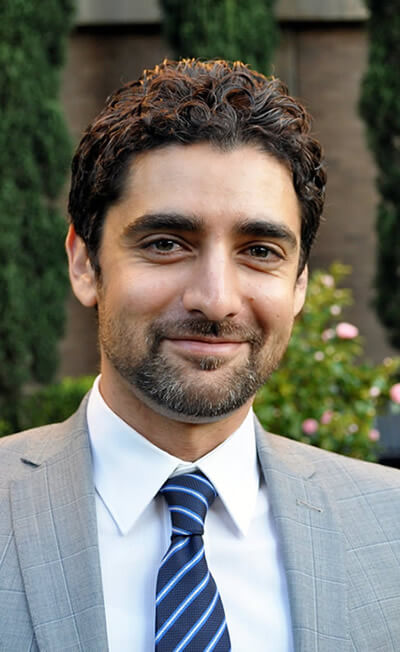
Photo of Omer Yezdani

1. What is your job title?

Director, Office of Planning and Strategic Management (OPSM) at Australian Catholic University (ACU).

I also help where I can as the Deputy Chair of the Australian Network of University Planners (ANUP).

2. Briefly, how would you describe your role in terms of your place in your institution?

My role is interesting and a continuous challenge. I’m privileged to have access to a lot of the university’s information assets and have frequent engagements with the ACU Senior Executive. While I’m sometimes thought of as the ‘data guy’, I see my role as a function within the broader strategic management cycle—the provision of information analysis and reporting to guide and support the execution of our Strategic Plan. The provision of information, advice and analysis are ultimately strategy related. I am involved in around 25 different advisory committees and groups—some of which meet every month—and I chair a handful of these. My days are often full of meetings, discussions and engagements, figuring out how we navigate many complex and interrelated challenges, and I am usually juggling many things at once. While my work is focused a lot on strategic thinking, technology, information and data, it’s most often all about people.

3. From your perspective, what are the emerging areas of interest in institutional research?

  • Large-scale data integration: One of the major challenges for me has been wrangling multiple sources of data to derive meaningful analysis and insights. Our business intelligence (BI) mantra is to ‘transform the university’s information into a meaningful intelligence asset, available anywhere, anytime and on any device’. There is huge analytics potential using the data we already have, while making this information available when and where people need it. Sometimes it’s not the best analysis that’s used, it’s simply the one that’s available. For me, the relationship between time and value in data is always a pragmatic concern.
  • Machine learning and automation: The robots are taking our jobs! Well, maybe not entirely, but I think automation is having a massive impact on the changeover of skills for institutional researchers, which at the same time opens many new doors for deep analysis. There is a lot to be excited about in machine learning, institutional researchers can be at the forefront of implementing this in their institutions.
  • Adding value: Like all corporate services, the provision of information, data and BI comes at a cost. A major focus for us has been the idea of ‘adding value’. We do this through being proactive and more deeply understanding user needs, while striving to work in partnership. Our value proposition (‘to be a vital source of business intelligence and a strategic partner in planning, quality and risk’) is an enduring aspiration, but it’s also always at risk, because needs and expectations are continuously evolving. The changing nature of higher education policy means we need to stay ahead of the curve and continue to ask ourselves: what value does this add, what’s the return on investment, who are our clients, is there a better way, can this be automated?

4. What do you believe will be the future priorities for institutional research?

I think this is mostly covered in the answer above. To add one further point, there is a lot of untapped potential in predictive analytics that could be driven using existing data; however, technology is not usually the barrier. As mentioned earlier, during my time establishing and leading a BI program, I have learnt this is a program that’s less about technology and more about people. We really need to understand what people’s strategic goals (or problems) are and what they are trying to address and apply solutions to meet those needs.

5. Complete this statement: In my role, I can’t operate effectively without…

… an amazing team, which I am extremely proud of. Every member of my directorate brings a wealth of expertise and continues to expand their depth of knowledge in their area of responsibility. As the director I provide as much encouragement and support as I can for learning and development. To me, it’s very important to be a learning organisation, to be a collaborative, agile and high-performing team, and to help our people realise their aspirations and have a fulfilling career at ACU. I also love a cup of coffee, or two.

Newsletter

Read the January 2018 AAIR newsletter
Right Here, Right Now!

January 2018 Newsletter

Answer 5 Questions

Would you like to feature in the ‘Institutional Researcher’s Corner’ segment of our newsletter, The Institutional Researcher?

Contact our trusty editors with the answers to 5 simple questions, and we’ll feature you in an upcoming issue.

Email Our Editors

Feature icon

Subscribe to our Mailing List

About

  • Rules
  • Mission
  • Objectives
  • Code of ethics
  • Org structure
  • Committee
  • Meeting schedule
  • Annual statements
  • Timeline

Membership

  • Join
  • Benefits
  • Categories
  • Members
  • Life members
  • Honorary members
  • Fellowships

SIGs

  • BI & analytics
  • Data governance
  • Global university rankings
  • Institutional reporting
  • Load management & planning
  • Surveys & evaluation

Resources

  • Subscribe
  • Jobs board
  • What is IR?
  • IR job roles
  • Newsletter
  • JIR
  • Other journals
  • Useful links

Blog

  • President's desk
  • Editorials
  • IR corner
  • Events
  • Publications
  • From the experts
  • Soapbox

Australasian Association for Institutional Research Inc.
Suite 204, 585 Little Collins Street
Melbourne Vic 3000
info@aair.org.au

twitter facebook linkedin twitter
  • © Australasian Association for Institutional Research 2025
  • Privacy Policy
  • Terms of Use
  • Disclaimer
  • About
    • Rules
    • Mission, Vision, Values and Strategy
    • Objectives
    • Code of Ethics
    • Organisational Structure
    • Executive Committee
      • Position Descriptions
      • Meeting Schedule
    • Annual Statements
    • Timeline
  • Membership
    • Join
    • Benefits of Membership
    • Membership Categories
    • Variation to Institutional Membership
    • Members
    • Life Members
      • Legacy Life Members
    • Honorary Members
    • Fellowships
  • Events
    • Proposed 2026 Calendar
    • Past AAIR Events
    • Awards
  • SIGs
    • Business Intelligence & Analytics
    • Data Governance
    • Global University Rankings
    • Institutional Reporting
    • Load Management & Planning
    • Surveys & Evaluation
  • Experts
    • Experts Search
  • Resources
    • Subscribe
    • What is Institutional Research?
      • IR Job Roles
    • Newsletter
    • JIR
    • Other Journals
    • Useful Links
  • Blog
    • From the President
    • Newsletter Editorials
    • Institutional Researcher’s Corner
    • Events
    • Publications
    • From the experts
    • Soapbox
  • Contact